San Diego’s Housing Refugee Crisis

You read about and see on the TV news the Syrian refugee crisis, but San Diego is experiencing its own quiet refugee crisis.  It is not caused by civil war, but is caused by crushing rents and crazy sale prices. Who are these refugees?  They are the people we care about the most, our children.

Dan McSwain’s recent article in the San Diego Union-Tribune explores this new family problem.  He attributes this to high government housing fees and limits on new construction.  Our children have become “distant housing refugees” moving to other states like Arizona, Nevada, and Texas to find affordable housing.

McSwain points out, if you doubt that local government fees are a problem.  Lynn Reaser, Chief Economist of the Fermanian Business & Economic Institute at Point Loma Nazarene University, who in 2014, led a research team that found local regulations accounted for an astounding 40 percent of the cost a new house, condo or apartment in San Diego County.  Reaser’s team can demonstrate how $180,000 of that $450,000 house or apartment owes to local regulations.

Now you might think that these regulations protect the environment from dirty hordes of new residents. In fact, the opposite is often true, as Harvard economist Edward Glaeser has argued persuasively in a series of papers.

“In California’s case, preventing local construction for environmental reasons only ends up increasing  carbon emissions by pushing building to less salubrious climes,” Glaeser wrote.

In San Diego’s case, anti-growth policies in the 1990’s and 2000’s contributed to a historic construction boom in Southwest Riverside County.  Those people who moved to Temecula, got in their cars and commuted back to their jobs in San Diego over an hour down Interstate 15 causing immense traffic problems and increased carbon emissions.

I encourage you to read the entire McSwain article as it furthers breaks down other California regulations such as the expanded California Environmental Quality Act of 1970 that limited public projects.

I don’t expect any of our regulations and fees to change especially since the homeowners are benefiting from these high prices.  However by reducing local government regulations and fees, we can make housing more affordable thereby keeping our children here in San Diego.
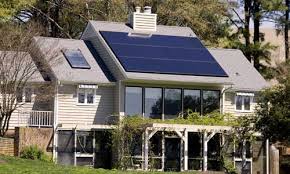
 

Do Solar Panels Add Value To Your Home?

Solar Panels 2

Do solar panels add value to your home?   I asked that question to myself after installing my solar panels over 2 years ago.  My initial reason for installing solar panels was not to increase the value of my home, but I was tired of paying over $500 per month in the summer months when I was running the air-conditioning 24/7. (My average bill was $300 per month from the previous 12 months.)

Adding solar panels absolutely saved me money in the short and long run.  And I received some additional benefits, as well, from the 30 percent federal tax credit which expires in 2019.  The calculation of determining your savings can be complicated depending on whether you lease or buy and how many & where the panels can fit on your roof top.  In my case, I financed a 6.54kW system (20 Panel – Sunpower 327W E20 & Sunpower Inverter) at 2.99% over 12 years with no money down resulting in a $227 per monthly payment after receiving my 30% tax credit which was used to pay down my hybrid no-interest loan amount. My initial savings was $73 per month!  Since then, utility rates have gone up significantly further increasing my savings.  It was a “no brainer!”  Oh by the way, the price of panels have become more cost competitive in the last 2 years making the savings even greater for anyone purchasing now.

So, do solar panels add value to your home? The answer is yes—but only in certain circumstances.

When Do Solar Panels Add Value to Your Home?

If you purchase a solar panel system for your home, those panels can add value. But just how much value do solar panels add? Estimates vary.

A group of economists studied data from solar panel installations in San Diego and Sacramento counties from 2003 through 2010 and made a surprising discovery. They found that homeowners with solar panels could recoup almost the full price of the installation upon sale of the home. Essentially, a solar panel system added a premium of about $20,000 to the home’s selling price.

According to research from the National Renewal Energy Laboratory, each kW of an installed solar panel system can add $5,911 to the value of your home. The typical home system produces 4 kW of power, which would increase your home’s value by $23,644.

A study by Lawrence Berkeley National Laboratory examined home sales in the San Diego metro area in 2012 and 2013. All of the homes with installed solar panels showed a price premium. The average boost to home value was $17,127.

While there’s no exact number for how much value solar panels add to your home, many groups agree that purchasing a solar panel system can boost the sale price. Of course, this added value is on top of all the money you save on your utility bill.

When Do Solar Panels Become a Liability?

As the studies cited above show, purchasing solar panels does add value to your home.

A leased solar panel system, on the other hand, can be a liability.

As the Los Angeles Times reported, leased solar panels can cause headaches for homeowners who want to sell. Some potential buyers won’t go through with the sale unless homeowners buy out the remaining lease payments, which can cost $15,000 or more.

While a solar panel lease can be transferred to the new buyer, home-buyers are often reluctant to take over the payments. They have to qualify for the lease themselves. If they’ve already maxed out their borrowing capacity to purchase a home, adding in the solar lease payments may push the home out of reach.

Fannie Mae says that solar lease payments must be included in a borrower’s debt-to-income ratio. On top of that, the solar leasing company (the true owner of the panels) must have insurance to cover any property damage resulting from malfunction or faulty installation, which can also complicate the home sale.

Do leased solar panels add value to your home? Not according to Fannie Mae. Those lending guidelines specifically say that leased solar systems and solar power-purchase agreements (PPAs) cannot be included in your home’s value when it’s appraised.

——————————————

In summary, solar panels save money on your monthly bills and can increase the value of your home.  It is important to note that not all solar panels are created equal with each manufacturing offering different prices, warranties and some manufactures even waive the warranty if your home is within so many miles of the coast exposing the panels to the corrosive marine air.  If you want to talk solar, it is one of my favorite subjects to discuss besides the aspects of climate change.  You can reach me anytime at (858) 342-6810 or clink on the link Ask Broker Mark if you have any written comments.

How to Win a Bidding War

The San Diego real estate market for first time home buyers are facing incredible competition especially in the price range under $500,000.  Multiple offers are a given fact.  You must be prepared to face this reality and be prepared to have a strategy to come out ahead in this unfortunate bidding war environment.  Here are few steps that will mold your strategy into a winning one.

1. Get a preapproval letter from your lender

Getting pre-qualified, which merely confirms your income and how much a bank might be willing to lend you based on your credit profile, isn’t the same as having preapproval for a specific purchase offer.

You can up your chances of beating out other buyers by including a letter from your bank stating that your lender has underwritten your application and it’s simply pending appraisal.

This includes submitting all of your financing documentation to your lender before looking at homes and certainly before writing any offers. That way you can pounce quickly when you find the home you want, and avoid the stress of submitting preapproval paperwork and writing an offer at the same time.

2. Use an escalation clause

If you’re in a multiple-bid situation, you can strengthen your offer by using what’s called an escalation clause. It’s essentially a contract addendum that states you’re willing to increase your offer incrementally up to a certain limit if other offers come in that match or top your initial bid.

For example, say the seller’s asking price is $200,000. Your real estate agent would write your offer to state: “My initial bid is $200,000 with an escalation of $2,000 over competing offers up to $210,000,” or something to that effect. If another bidder offered more than $210,000, however, you’d be out of the running.

An escalation clause is a smart strategy that shows strong interest, but it’s important to stay within your budget and be willing to walk away if bidding goes beyond your limit.

3. Limit the contingencies

Sellers have the upper hand in a multiple-bid situation, and they want offers that are clean and concise. If you know other bids are coming in and you really want a home, avoid putting in too many contingencies or making too many demands.

“Don’t include things like asking the seller to purchase a home warranty or requesting that the seller leaves or repairs certain items.  Having too many of these items in your contract will make it likely that a seller tells you ‘no’ over another offer.

4. Be flexible on the closing

Let’s say someone outbids you by a few thousand dollars, but you’re willing to give the seller more time to move out. That flexibility can make you the front-runner in a multiple-bid scenario. I have seen buyers snag their dream homes even when outbid because they either let the sellers rent back the home for a period or pushed back the closing date.

Extending that courtesy can make your offer more attractive to a seller who might otherwise have to spend more on moving expenses or be crunched for time to find another home.

On the other hand, if a home is already vacant, sometimes you can win the seller over by offering to close in a shorter time. Buyers who offer to close quickly — sometimes within 21 days — can edge out buyers who haven’t been preapproved or have to sell their current home to buy a new one.

Sellers are concerned about liability, theft, holding costs and hazards with a vacant home.  Offer to close at the seller’s convenience with occupied homes. Be flexible if the seller needs to find a new home; provide them that time.

5. Write a ‘love letter’ to the seller

With so much fierce competition out there, sometimes appealing to the heart can make your offer stand out. I suggest that buyers write a heartfelt letter to sellers explaining why they want the house and even have them add a couple of photos of them and their kids or pets.

6. Don’t count yourself out after a bidding war

If you lose a bidding war and the seller chooses another bid, stay in touch if you’re still interested in the house. If a buyer offered way over the asking price, the deal could fall apart on appraisal or the buyer might be bidding on multiple properties to see which one sticks.  Staying in touch with the listing agent throughout their escrow period will keep you at the top of their list if something were to go wrong.

Conclusion – Plan ahead to get the edge

The homebuying process can feel cutthroat at times, but you’ll be in a better position to win the house you want if you write a strong, competitive offer that follows these strategies.

You may well lose one or two bidding wars before you win one; it’s almost a rite of passage for homebuyers. Good luck on your home search, and may the odds be ever in your favor!